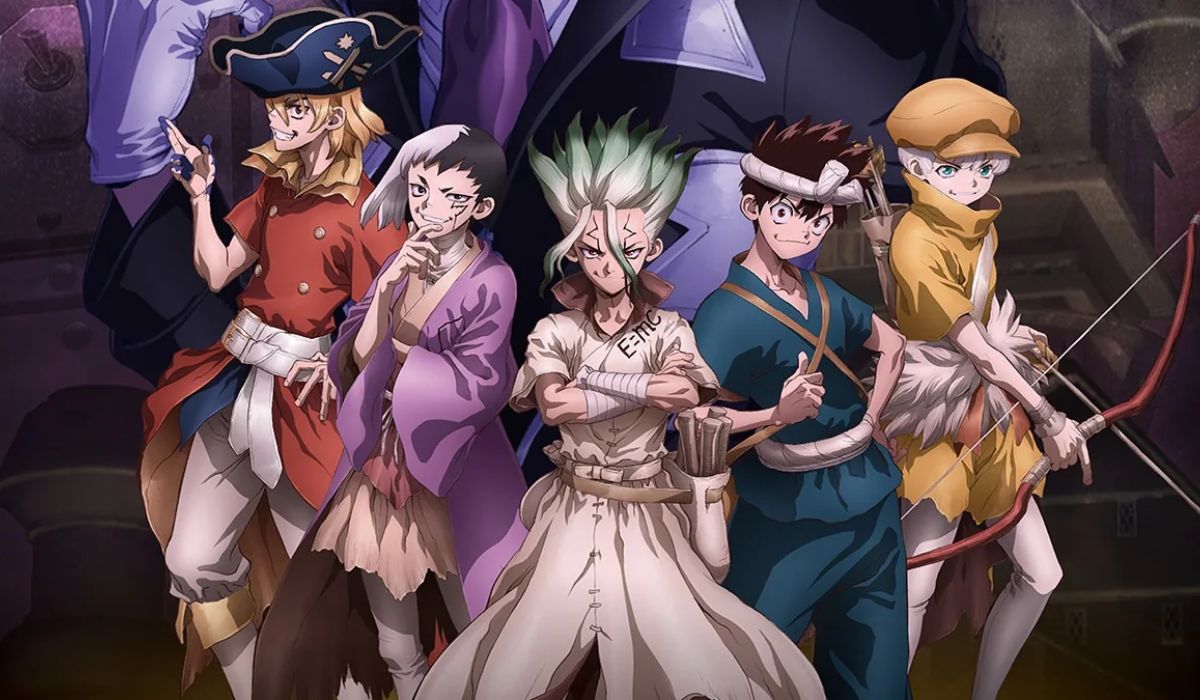
From the very first moments Sparks of tomorrow I started screening on several displays in the Anime Expo exhibit hall, feeling certain that this was going to be one of the best anime of the season, if not the best. The project is based on the novel by Hiro Yuki 20 Seki Denki Mukuroku It was originally announced in 2018, and will be animated by Kyoto Animation Company. Expectations were high for those who knew how much time had passed since the anime project was first announced. And for those who were just curious to see what KyoAni was capable of, chatter in the crowd indicated that many were expecting something on par with if not beyond the other great projects the studio had put out.
The panel consisted of the premiere of the first two episodes of the series Sparks of tomorrow. After that there was a Q&A segment with director Minoru Ohta and producer Satori Senami.

The first two episodes of Sparks of tomorrow
Speaking first about the premiere, the first two episodes were, as mentioned, amazing. Sparks of tomorrow It is an amazing work of animation and art. The series is set in Kyoto in the early 20th century in a version of history in which only steam engines had advanced and seen widespread adoption up to that time. Electricity, both for the series’ characters and as depicted in its art, is something incredibly new. Simple light bulbs scattered over a street have a pleasant warmth and radiance, with the glow in particular illuminating the often previously dark scene. Soft pulses of light accompany the lights that are initially turned on, adding a dynamic element to the already enjoyable effects of light and electricity. On screen, the characters react with wonder and joy, turning their fear of the dark into relief or their fear of death into a thrill for life. Electricity Exhibition in Sparks of tomorrow It’s more than just a microcosm of how amazing new technology can be. It was as if the raw ingredients of hope had been mapped onto a technological breakthrough.

As cool as it is to photograph light from electricity, this wasn’t the element that impressed me the most. side of Sparks of tomorrow What I did was music, without a doubt. I think this is the first project I’ve heard with Hitomi Koto’s music, but if I had my way, it certainly wouldn’t be the last. music Sparks of tomorrow It makes use of multiple parts of a full orchestra and really delivers the feeling of being an instrumentalist a result Rather than just a series of songs strung together. The music is not constantly playing in the background, but when it is, miniature sets of different instruments are used at different points in the episode. A scene in which characters wander in search of a home may be accompanied by pointed notes from a selection of brass instruments, while a journey from one destination to another may feature woodwinds, with the low notes of the bassoon blending into the long, gentle sound of the clarinet. There is a clear commitment to making the music match many of the sounds of the actual 20th century, and if you told me that Cotto pulled Debussy out of a time machine to work on this music, I might believe you.

In terms of character and plot, I liked both episodes a lot as well. Without spoiling the finer details, Episode 1 does a good job of establishing the pre-series origins of the hero and his brother, introducing the appeal of electricity (in this world) and the backbone of innovation that serves as a guide for many early plot developments. Sparks of tomorrow. The episode also introduces a variety of characters and their families/companions. My favorite character is Yosuke Mizoe, an eccentric type who often delivers English lines, has some funny facial expressions, and serves as an antagonist in the first two episodes. Episode 2 involves a lot of chases as different characters compete to recover the catalog of inventions, with the mystery surrounding what types of inventions these inventions may have built throughout the episode and chase giving the anime plenty of opportunities to show just how strong KyoAni’s animation ability is. Fads of all kinds are used Sparks of tomorrow And moving with great effect, as well as machines such as cars and various steam engines. I was pleasantly surprised by how smooth this animation was, as many other projects often have noisy or distracting CG in places like this.
Questions and answers for employees
This particular iteration of Sparks of tomorrow The first global tour was the fourth, and I started off the conversation by asking both guests how they enjoyed Anime Expo. The series is Ota-san’s directorial debut, and he noted that he really appreciates the support and encouraging feedback from the global audience across the various premieres. Likewise, Senami-san appreciated the audience’s reactions to the first two episodes. Guests are usually backstage during the screening portion of these panels, but Anime Expo guests (and Western Conference attendees in general) are vocal about their excitement, laughter, and general reactions to acts like this.

Both cast members spent some time reviewing the story and concept of the series, talking about the sibling duo that the first episode largely focuses on and describing the alternate timeline version of Kyoto that Sparks of tomorrow Ota-san spoke about some of the early difficulties with the show, explaining that “one of the things when we started the project was to be aware of the stereotypes and pitfalls that a lot of people saw in shows,” adding that “it definitely took a lot of time and convincing fellow employees who worked on the show to support some of the ideas they had when they were in pre-production for this show.” Senami-san spoke about some of Ota’s idiosyncrasies, but noted that “his personality and uniqueness shine through in the final product.”
They discuss the show’s characters, especially the contrast between Kihachi Sakamoto and Enako Momokawa, who are constantly juxtaposed in the early episodes for their ideas about religion, technology, progress, and hope. He spent a lot of time talking about Yusuke, with the audience bursting into laughter as the host pointed out that the character was his least favorite.

The final sections of the Q&A used fan-submitted questions, with the first asking what should look familiar in this world and what should look different, while others asked about transferring steampunk technology and bringing up a certain degree of art inspired by Impressionism. Ota-san talked about breaking free from the confines of the Steampunk aesthetic that the staff set out to work with, as well as making sure the viewer could still tell the story taking place in Kyoto. For the backgrounds, Ota-san explained that he “drew a lot of inspiration from the Impressionist art style” in order to create a unique look for the art and backgrounds in Sparks of tomorrowAs for the work, it is “80% digital and 20% analogue.” Both guests emphasized that the team behind this anime is truly unparalleled and that a significant amount of time and back and forth meetings went into turning their vision into reality. It definitely shows.
look forward to Sparks of tomorrow
While the show overall has a lot to look forward to if the first two episodes are any indication, guests specifically pointed to Episode 11 as one that viewers should brace ourselves for. Overall, I think this is one of Kyoto Animation’s strongest entries in recent years and without a doubt one of the best anime this season. I’m looking forward to future episodes (the first two have been released as of press time) and can’t wait to hear more music.
Sparks of Tomorrow premiered globally on Netflix on July 5, 2026, with new episodes scheduled to be released weekly every Sunday. You can check it out here.
© Hiro Yuki, Kyoto Animation / Sparks of Tomorrow Production Committee
About the Author